







Found in Translation is a new bimonthly column reviewing books translated to English in a variety of speculative shapes. Some traditional, some experimental, some told through cultural narratives that might seem peculiar if you’re not used to them, but all have the same unifying factor: there is always more out there.
Kinship is an invisible thread, and you have to picture it constantly in order to remember it’s there.
The line between what is considered speculative or not can be thin in Latin America. Fiction is not usually divided between literary and genre, unless it’s for the specific label of a library or bookshop, and the definition of fantastic or realistic is a nebulous one. Some of the most respected and well-known authors of the region have not only written books that are considered magical realism, but that incorporate elements that, elsewhere, would be understood as horror, gothic, fantasy and even sci-fi, but are not necessarily categorized as such. Telenovelas often incorporate ghosts, folklore creatures and magical concepts, which are understood by the audience as part of the story’s sense of realism, or ways to conceptualize social and individual preoccupations through the introduction of something extraordinary and strange.
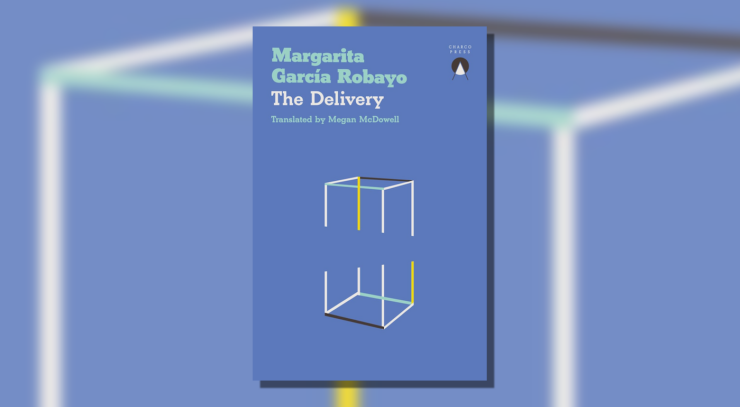
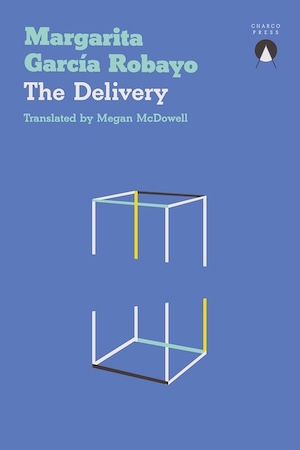
The Delivery is another entry in this long tradition of blurring the strange with the mundane, and a very compelling one as well. The protagonist, a writer who moved from Colombia to Argentina with the intention of being as far from her origins as possible, keeps contact with her family through sporadic videocalls that do nothing but emphasize the abyss between them, and through the packages that her sister sends religiously, often with food that rots and stains the gifts that come with it. One day, when she’s working on applying to a grant to study in the Netherlands, another one of her sister’s packages arrives, this time a huge box delivered to her building, and her mother walks out of it.
It’s the last thing she needs, amid the fallout with her only friend, her underpaid freelance job at an advertisement company with an overly familiar boss, the neighbor who constantly pesters her to take care of her six-year-old son, the doorman who antagonizes her, the boyfriend who still doesn’t know she plans to leave to another continent for who knows how long. The only source of comfort is the building’s cat, Catrina, who comes and goes from her terrace, but not even this comes with peace, as the animal keeps bringing her dead rats and pigeons that end up in the couple next door’s terrace.
This compact novel is a labyrinthine sequence of emotional traps. The narrator wants to write, but always avoids the act of writing. She treats her partner as disposable to avoid being disposed of first. Even with the bizarre element of her mother being delivered to her doorstep like she’s no different from the photographs and fruit she usually receives, the protagonist is so entrenched in her own avoidance that her first thoughts are not how did this happen, but where she will sleep from now on.
Tangled here are two major threads: the impossibility of erasing the past and the difficulties of immigration. The narrator is so averse to discussing her earlier life—her childhood, her family, her previous self—that she grows cold when her boyfriend wants to know her better, trying to keep a firm border between the immediate present and the vague future and the rejected past. It’s useless. Not because blood is stronger than any other bond, but because a person can’t sprout of thin air, or in this case, because they can: her mother does, to come and go. The secondary issue is one of racism and xenophobia. The narrator comes from a mixed race family, configured like many others in Latin America: a Black mother, a daughter with textured hair but light skin that she fights tooth and nail to keep pale, another with brown skin but straight hair. She’s not interested in racial issues, but they’re a constant presence in her life. Neighbors who always assume the worst; workers who resent having to cater to someone they perceive as inferior; corrections to her Spanish; suggestions that we’re not used to living like this, we’re civilized here. Here—this place of rejection that can be so universal for immigrants.
Written during lockdown, The Delivery is an interesting piece of pandemic fiction, in the sense that it sublimates many anxieties of its time even if COVID-19 is never mentioned in the plot. The book is filled with paranoia, part of it reasonable and sound, part of it out of control; it’s mostly set inside an apartment, and the rare moments outside are either tense and dangerous, or comforting in their isolation, like the moment she takes her mother to a field outside of Buenos Aires. Characters are also terrified of invading bodies, like the neighbors who mistrust the protagonist or the mother who enters the apartment through a package, disgusted by people sharing drinks, communicating through videoconference. It’s subtle, but present in its entirety, and a fascinating example of the literature produced at the time.
La Encomienda by Margarita García Robayo was originally published in Colombia (Spanish) in 2022, and was translated to English in 2023 by Megan McDowell (Charco Press).
Buy the Book
The Delivery
